
Why Your Website Isn’t Ranking: 7 Common SEO Mistakes and How to Fix Them
In the competitive Australian digital landscape, seeing your competitors take the top spots on Google while your site lingers in obscurity is frustrating. You’ve put in the work, launched the site, and perhaps even written a few blogs, yet the traffic isn’t flowing.
Why your website isn’t ranking usually boils down to a disconnect between what Google’s crawlers see and what your users experience. In 2026, SEO is no longer about “tricking” an algorithm; it is about demonstrating Experience, Expertise, Authoritativeness, and Trustworthiness (E-E-A-T).
This guide breaks down the seven most frequent hurdles holding Australian businesses back and provides a clear roadmap to technical and content recovery.
1. Poor Technical Foundation: The Silent Ranking Killer
Before Google can rank your content, it must be able to find, crawl, and understand it. If your technical SEO is broken, even the best content in the world won’t save you.
Crawlability and Indexing Issues
If Googlebot encounters a “noindex” tag accidentally left over from development or hits a wall of 404 errors, your site will vanish from search results. A messy site structure makes it difficult for crawlers to establish a logical hierarchy.
The Fix: Conduct a Technical Audit
- Check Robots.txt: Ensure you aren’t accidentally blocking vital CSS or JS files.
- Sitemap Submission: Ensure your XML sitemap is updated and submitted via Google Search Console.
- Fix Internal Redirect Loops: Too many redirects slow down crawlers and frustrate users.
2. Ignoring Local SEO and Australian Search Intent
Many businesses optimize for global terms while ignoring their local backyard. If you are a service provider in Sydney or Melbourne, ranking for a generic global term is less valuable than ranking for “specialist services in [City].”
The Mistake: Generic Targeting
Using US-centric spelling or failing to mention local landmarks and service areas tells Google your site might not be the most relevant result for an Australian user.
How to Fix It
- Google Business Profile (GBP): Claim and optimize your listing.
- Local Citations: Ensure your Name, Address, and Phone number (NAP) are consistent across the web.
- Localized Content: Mention local suburbs and Australian-specific industry standards.
3. Thin Content and Lack of Topical Authority
Google’s “Helpful Content System” prioritizes depth. If your pages are only 300 words long and offer surface-level advice, Google will view your site as “thin.”
Understanding Topical Authority
Topical authority is earned when you cover a subject so comprehensively that Google views you as a go-to resource. If you only write one article about a topic, you lack the supporting internal links to prove your expertise.
| Feature | Thin Content | High-Authority Content |
| Word Count | < 400 words | 1,200+ words (as needed) |
| Value | Regurgitated facts | Unique insights & data |
| Structure | Unorganized | Clear H2/H3 hierarchy |
| User Intent | Barely addressed | Fully satisfied |
4. Neglecting Core Web Vitals and User Experience (UX)
In 2026, page speed is a confirmed ranking factor. Google uses Core Web Vitals to measure how users perceive the experience of interacting with a web page.
The Impact of Slow Loading
If your site takes more than three seconds to load on a mobile device, your bounce rate will skyrocket. High bounce rates signal to Google that your page isn’t meeting user needs, leading to a drop in rankings.
Best Practices for UX
- Optimize Images: Use WebP formats and compress files.
- Minimize Javascript: Reduce heavy scripts that delay “Interaction to Next Paint” (INP).
- Mobile-First Design: Ensure your site is perfectly responsive on all screen sizes.
5. Keyword Stuffing vs. Semantic Search
The days of repeating your primary keyword 50 times are over. Modern search engines use Latent Semantic Indexing (LSI) and Natural Language Processing (NLP) to understand context.
The Mistake: Over-Optimization
Force-feeding keywords into sentences makes your content unreadable. This triggers spam filters and ruins the user experience.
The Solution: Entity-Based SEO
Focus on “entities”—related concepts and terms. For example, if you are writing about “SEO,” you should naturally mention “backlinks,” “keywords,” “search engine algorithms,” and “metadata.”
6. Weak Internal Linking Strategy
Internal links are the “roads” that connect your pages. Without them, Googlebot might find your homepage but fail to discover your deep-service pages.
Why Internal Links Matter
- Distributes Link Equity: Passes “authority” from your high-performing pages to newer ones.
- Increases Dwell Time: Keeps users on your site longer.
- Establishes Hierarchy: Tells Google which pages are the most important.
Internal Linking Suggestion: [Anchor Text: technical SEO audit checklist]
7. Lack of High-Quality Backlinks
Backlinks are like digital votes of confidence. If no reputable websites link to you, Google has no reason to trust your authority.
Avoid “Black Hat” Links
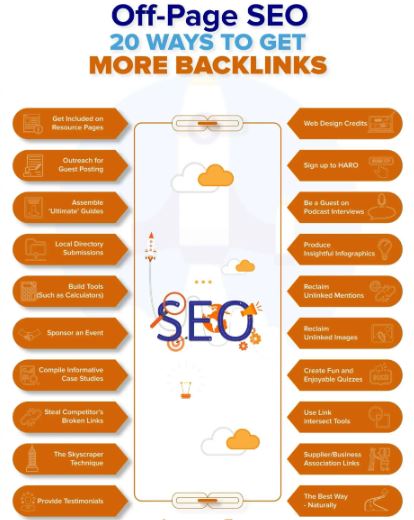
Buying cheap links from link farms will result in a manual penalty. Instead, focus on “Digital PR”—creating content so good that other Australian industry leaders want to link to it.
Strategic Outreach
- Guest post on reputable Australian industry blogs.
- Partner with local influencers or trade associations.
- Create original research or data studies that journalists can cite.
Step-by-Step Framework for Recovery
If you’ve identified why your website isn’t ranking, follow this 4-week recovery plan:
- Week 1: Technical Clean-up. Use Google Search Console to identify “Indexed, though not submitted in sitemap” errors and fix 404s.
- Week 2: Content Audit. Identify “zombie pages” (pages with zero traffic) and either delete, redirect, or rewrite them.
- Week 3: UX & Mobile Optimization. Run a Lighthouse report and fix Largest Contentful Paint (LCP) issues.
- Week 4: Authority Building. Start an outreach campaign to secure three high-quality, relevant Australian backlinks.
Frequently Asked Questions (FAQ)
1. How long does it take to rank on Google in Australia?
Typically, it takes 3 to 6 months to see significant movement. However, for highly competitive keywords, it can take 12 months of consistent effort.
2. Does social media help my SEO rankings?
Social media doesn’t directly affect rankings, but it drives traffic and increases brand awareness, which can lead to natural backlinks.
3. Why did my rankings suddenly drop?
This is usually due to a Google Core Update, a technical error (like a broken plugin), or a sudden influx of high-quality content from a competitor.
4. Is AI content bad for SEO?
Google rewards high-quality, helpful content regardless of how it’s produced. However, unedited, generic content often fails the “Helpful Content” test and lacks E-E-A-T.
5. How often should I update my old blog posts?
You should review your top-performing content every 6 to 12 months to ensure facts are current and links are functional.
6. Can a slow website stop me from ranking?
Yes. Speed is a significant part of Google’s ranking algorithm, particularly for mobile search results.
Conclusion: Turning Your Rankings Around
Understanding why your website isn’t ranking is the first step toward digital dominance. By fixing technical errors, focusing on topical authority, and optimizing for the Australian user experience, you can climb the Search Engine Results Pages (SERPs).